
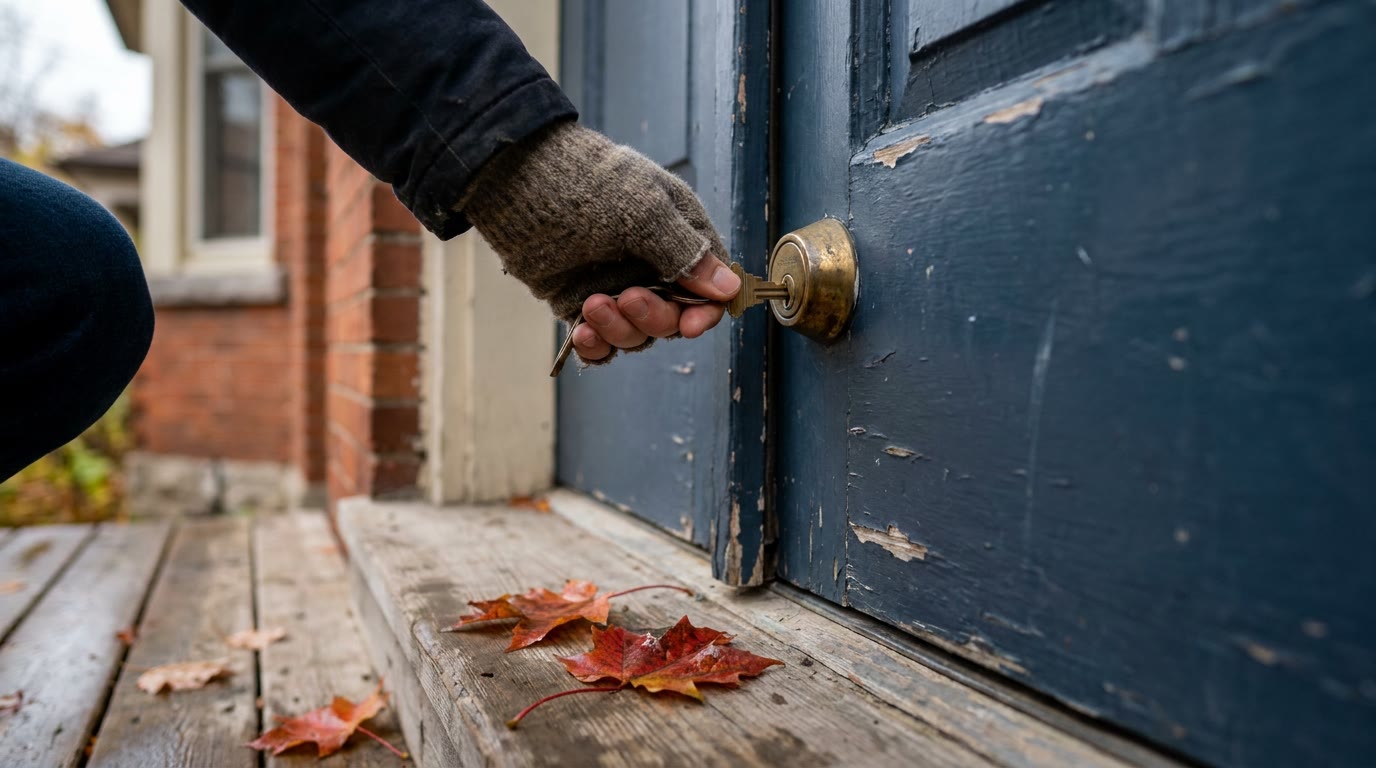
Deadbolt Hard to Lock Now That It's Cold? Why It Happens in Metro Detroit
If your deadbolt locked fine all summer and now you have to push, pull or lift the door to get it to throw, the lock is usually not the problem. Cold, dry air shrinks the door and the frame, and the bolt starts hitting the edge of the strike plate instead of sliding into the hole.
Most of the time, a deadbolt that turns hard in the fall is a door alignment problem, not a broken lock. As nights across Metro Detroit drop into the 40s and 30s, wood doors and frames give up the moisture they took on over a humid summer and shrink a little, and a heavy door can sag on its hinges. A few millimeters is enough for the bolt to rub the strike plate. Less often, the cylinder itself is dirty, dry or wet inside, and it is the key that feels stiff. Here is how to tell which one you have, and what to do about each.
First, Find Out Which Part Is Sticking
Open the door. With the door open, throw the bolt with the thumb turn on the inside, then try the key from the outside. How it behaves tells you where to look.
- Smooth with the door open, hard with it closed. The bolt is rubbing the strike plate or the hole in the frame. This is the fall classic, and it is an alignment fix, not a new lock.
- Hard even with the door open. The problem is inside the lock: the cylinder, the bolt mechanism or the key. Read the section on lubricant below before you spray anything into it.
- The key goes in stiff or will not go all the way in. Look at the key first. A worn or bent key, or a copy cut from another copy, often turns badly in any weather.
- It only sticks on the coldest mornings. Moisture inside the cylinder can freeze. On an exterior door that takes the weather head on, that is worth sorting out before January.
Why Metro Detroit Doors Move in the Fall
Southeast Michigan swings from humid summers to dry, heated winters, and a wood door, a wood frame and the house around them move with it. Older homes in Detroit, Royal Oak, Ferndale, Dearborn and the other inner-ring suburbs add their own reasons: frames that have settled over decades, hinge screws that have worked loose in soft wood, and doors painted so many times that the edge now drags.
The first cool, damp stretch of October is often when all of that shows up at once. The door has started to shrink, the heat has not been on long enough to settle everything, and Detroit's first freeze usually arrives in late October. A lock that is getting stiff now tends to get worse over the next few weeks, not better.
What You Can Check Yourself
- Tighten the hinge screws. A sagging door is the most common cause. Tighten every screw on the top hinge first. If a screw just spins, the hole is stripped, and a longer screw that reaches the framing behind the jamb often pulls the door back up.
- Look at the strike plate. Close the door slowly and watch where the bolt meets the plate. Scrape marks above, below or to one side of the hole show which way the door has moved.
- Check the weatherstripping. New or thick weatherstripping can push the door away from the frame so the bolt binds. If the door got hard to lock right after new stripping went on, that is your answer.
- Lock it without leaning on it. If you have to pull the door tight against the stripping for the bolt to throw, the bolt is not reaching the strike cleanly, and it will only get harder as the weather turns.
Should You Spray WD-40 in the Lock?
Not as a fix. WD-40 is mostly a cleaner and water displacer. It can free a sticky cylinder for a few days, but it leaves a wet film that collects dust and grit, and in a cold exterior lock that film thickens and makes the key stiffer. For a lock, use a dry lubricant made for locks, such as a graphite or PTFE lock spray. A short puff into the keyway, then work the key in and out a few times, is enough.
Two things to avoid. Never put cooking oil or grease in a keyway, and never force a key that will not turn: a key that snaps off in the lock turns a stiff lock into a lockout. If that does happen, our broken key extraction guide explains what to do next.
If a lock is truly frozen on a January morning, warm the key, not the lock. Hold the key in your hand for a minute, then insert it gently and try again. Do not pour hot water into a lock, because it runs deeper inside and refreezes.
When to Call a Locksmith
Call if the bolt still drags after the hinge screws are tight, if you have to lift or slam the door to lock it, if the key is stiff even with the door open, or if the lock is simply old and worn. A locksmith can reset or move the strike plate, adjust how far the bolt reaches into the frame, clean and service the cylinder, or replace a worn lock with one that suits the door. A deadbolt that does not fully extend into the frame is not really protecting the door, so this is worth fixing before winter, not just living with.
Our residential locksmith team handles stiff and misaligned deadbolts on homes across Metro Detroit. If you are thinking about new hardware anyway, our rekey vs. change locks guide explains the options.
Deadbolt still hard to lock?
Call us at (313) 236-4558, Sunday to Thursday 9:00 AM to 5:00 PM or Friday 9:00 AM to 12:00 PM, or tap a button below.


